
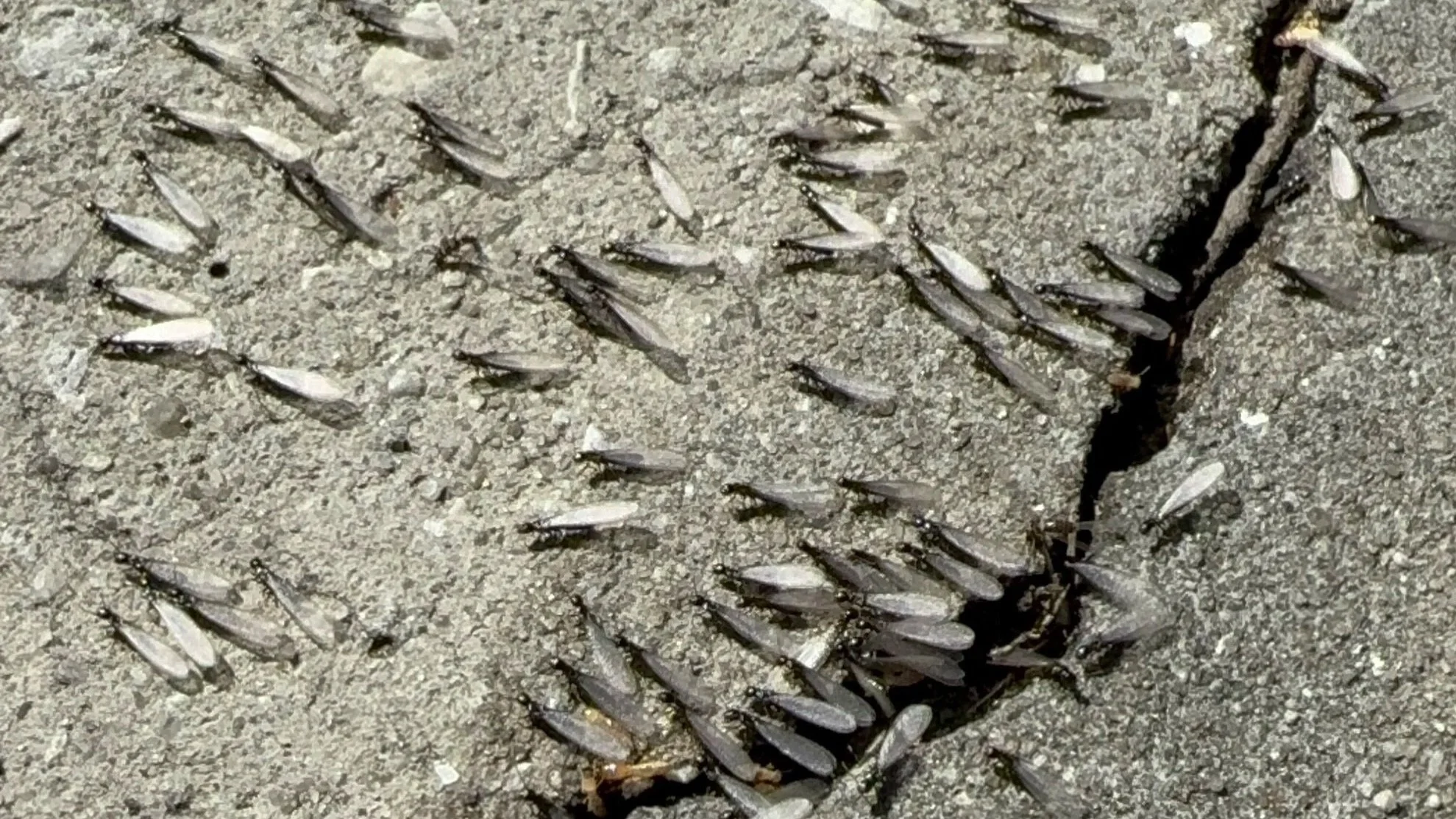
Eastern Subterranean Termites (Reticulitermes flavipes) Emerge from a driveway crack
Why North Central Florida
Homes are the New Target
for "Super Termites"
If you live in North Central Florida, you’re used to the perks of the "Nature Coast"—the springs, the canopy roads, and the quiet oak hammocks. But according to the experts at the University of Florida (UF/IFAS), our local landscape is currently undergoing a silent, subterranean shift that every homeowner needs to track.
For years, many of us in the Gainesville and Ocala areas felt a bit "safe" from the high-octane termite horror stories coming out of Miami or Fort Lauderdale. We had our native termites, sure, but the truly destructive invasive species were "South Florida problems."
That "safety net" has officially been removed.
The 2026 Study: A
Geographic Shift
A groundbreaking study released in February 2026 by UF/IFAS researchers has confirmed what many local pest pros have feared: invasive termites are moving north at an accelerating pace.
The research, which analyzed over three decades of monitoring data, highlights two specific culprits that are no longer respecting the traditional geographic boundaries:
The Formosan Subterranean Termite: Now established in almost all coastal and major urban corridors.
The Asian Subterranean Termite: Stepping outside of its tropical comfort zone and marching steadily into higher latitudes.
The takeaway from the authority at UF is clear: By the mid-2050s, no corner of Florida will be considered "low risk."
Why These "Migrants" Are
Different
You might be thinking, "Don’t we already have termites?" Yes, but these aren't your grandfather’s termites. The invasive species highlighted in the 2026 report are a different breed of trouble:
Massive Numbers: While native colonies might number in the thousands, a Formosan "Super Colony" can reach millions.
Aggressive Appetites: Because the colonies are so large, they don't just nibble; they consume. Structural damage can occur in a fraction of the time it takes native species.
The "Hidden" Factor: They are masters of stealth. The UF study emphasizes that these species often go undetected until the structural integrity of a building is already compromised.
What North Central Florida
Homeowners Should Look
For
Because these species are expanding their territory, your "annual check" needs to be a bit more rigorous. Keep an eye out for these red flags:
The "Night Swarm": Formosan termites are famous for swarming around outdoor lights during humid spring and summer evenings. If your porch lights look like a snowstorm of wings, it’s time to call a pro.
The Pencil Test: Use a screwdriver to gently tap baseboards or door frames. If the wood sounds like a hollow drum or the tool sinks in easily, you’ve likely been "hollowed out."
Mud Highways: Look for thin, earthen tubes running up your foundation. These are the "climate-controlled" highways termites use to get from the moist soil into your tasty, dry wood.
Protection is Better than a
Cure
The UF/IFAS study isn't just a warning; it’s a call to action. Because these invasive species are spreading faster than predicted, homeowners can no longer afford to be reactive.
Audit Your Perimeter: Keep mulch, firewood, and thick vegetation at least a foot away from your foundation.
The Moisture Trap: Ensure your A/C condensate lines and gutters are draining far away from the house. Moisture is a "Welcome" mat for these pests.
Trust the Science: Follow the lead of the UF researchers and partner with a pest control professional who uses data-backed monitoring systems.
The Bottom Line
We live in one of the most beautiful parts of the country, but the "Nature" in North Central Florida is always looking for a place to stay. The 2026 findings from UF/IFAS serve as a vital reminder: our homes are our biggest investments—don't let them become a buffet for the state's fastest-growing invasive threat.