
Red & Black Clusters on Your
Siding? Meet the Boxelder
Bug’s Florida "Twin"
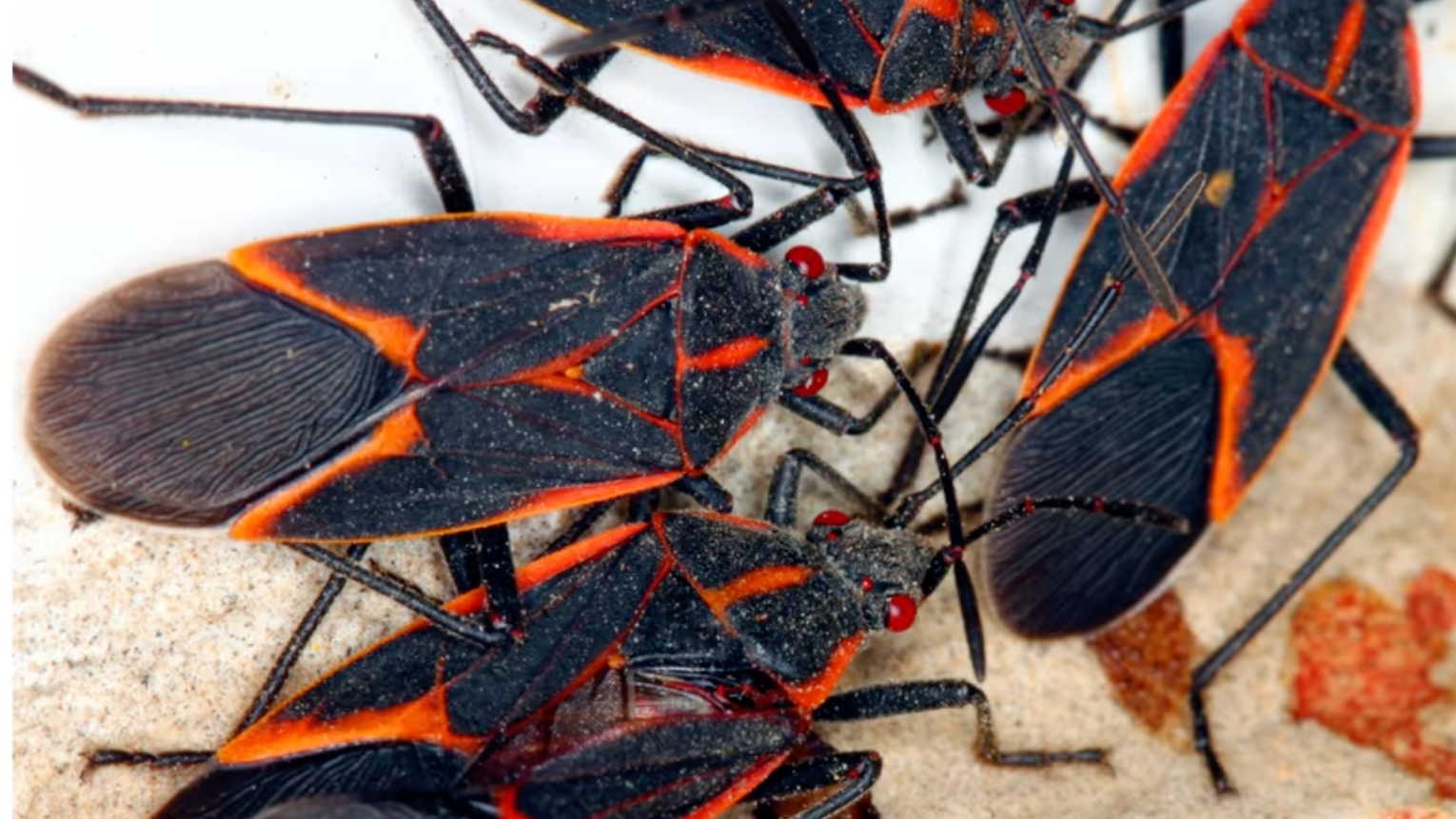
As the North Florida sun begins to warm up our Gainesville afternoons, you might notice something startling: hundreds, or even thousands, of tiny red-and-black insects congregating on your sunny walls, fences, or porch.
If you’re from up north, you probably recognize these as Boxelder Bugs. If you’re a Florida native, you might call them "Red-Shouldered Bugs." Regardless of the name, these pests are making their seasonal debut right now. Here is what Gainesville homeowners need to know about the upcoming emergence, how to tell them apart, and when to call in the pros.
The Identity Crisis: Boxelder
vs. Jadera Bug
In Gainesville and across North Florida, the "Boxelder bug" you see is often actually its southern cousin, the Jadera Bug(also known as the Goldenrain Tree Bug). According to the University of Florida’s Institute of Food and Agricultural Sciences (UF/IFAS), these two are often confused because they look nearly identical and belong to the same family of "scentless plant bugs" [1].
Boxelder Bugs (Boisea trivittata): Have three distinct red lines on the "shoulders" (thorax) and red veins on their wings.
Jadera Bugs (Jadera haematoloma): Feature red only on the sides of their shoulders and lack the red wing veins.
The Bottom Line: Whether it's the true Boxelder or the Jadera, their behavior is the same—they love to gather in massive "carpets" that can be an eyesore for any homeowner.
Why Are They Everywhere
Right Now?
These bugs are "seed feeders." They are heavily attracted to specific trees common in Alachua County, particularly the Goldenrain Tree and the Boxelder Maple.
As UF/IFAS Extension notes, the emergence typically peaks in March and April (though they can be active year-round in Florida’s climate) [2]. They swarm sunny, west-facing walls to soak up the heat. While they are harmless to humans—they don't bite, sting, or carry diseases—their sheer numbers can be overwhelming.
Are They Dangerous? (The
Good and Bad News)
The good news is that these bugs are technically "nuisance pests." They don't eat your wood like termites, and they don't destroy your ornamental plants.
The catch? They can be incredibly annoying.
Staining: If you crush them, they leave a pungent, reddish-orange stain that can ruin light-colored siding, curtains, or carpets.
Indoor Invasion: When temperatures fluctuate, they may try to crawl into cracks and crevices to get inside your home.
The "Ick" Factor: Seeing a wall of moving red nymphs (the bright red juveniles) is enough to ruin any backyard barbecue.
How to Control the Swarm
While UF/IFAS experts mention that "chemical control is rarely needed" for the health of the trees [3], they acknowledge that these bugs are a significant nuisance for homeowners.
If you're tired of seeing your home covered in red and black, here is how we can help:
Targeted Perimeter Barriers: We apply professional-grade treatments to the exterior of your home to stop them from congregating on your siding.
Entry Point Sealing: Our team identifies the cracks and crevices where these bugs enter, keeping them out of your living room.
Host Management: We can help you identify if a nearby Goldenrain tree is the source of your infestation.
Don't let your home become a bug hotel this spring! If the red-and-black "carpets" are taking over your Gainesville property, give us a call today for a free consultation